

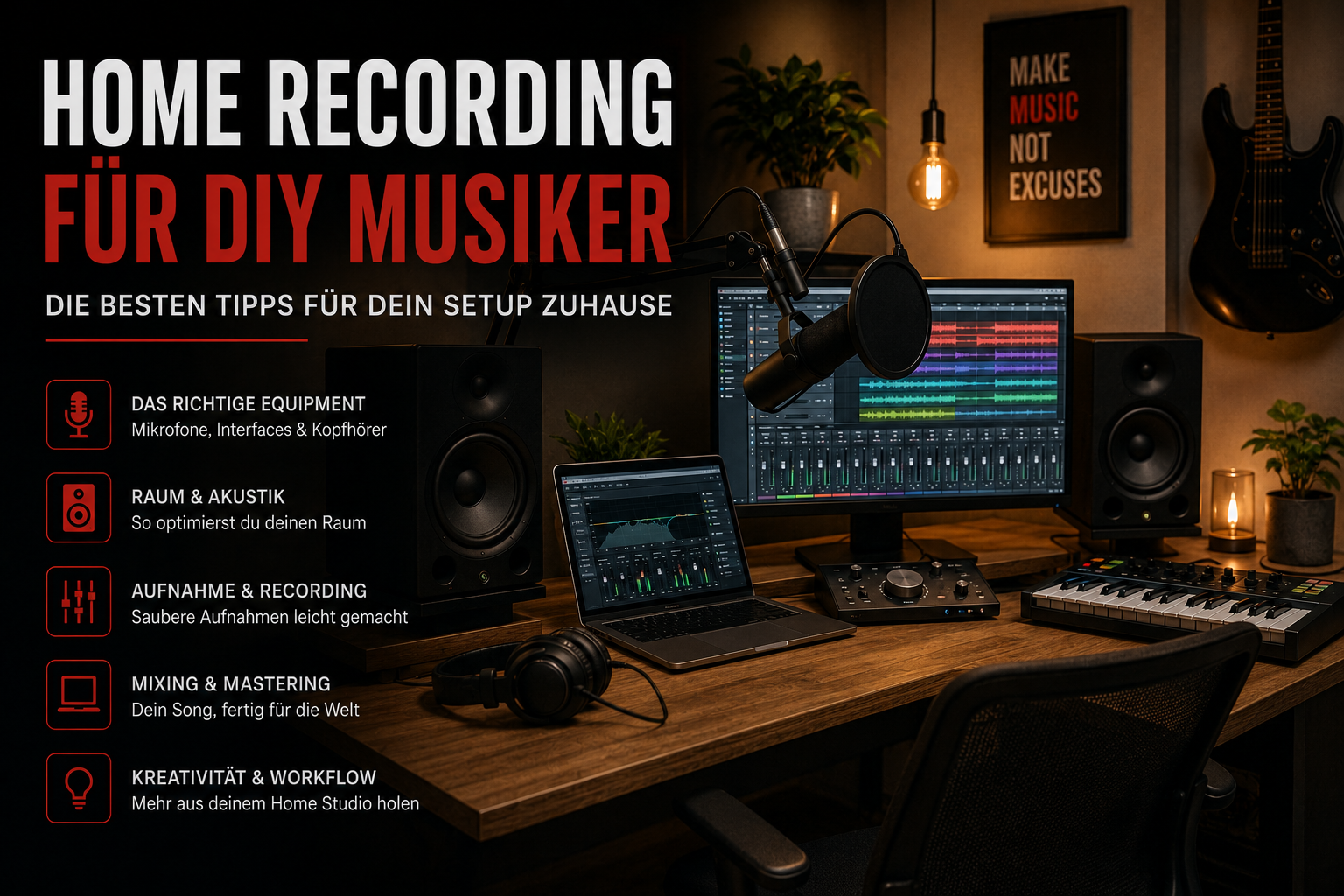
No studio of your own, no sound engineer, no problem. More and more artists are recording their tracks entirely at home – in the bedroom, in the basement, or in the storage room. And for good reason: home recording is affordable, flexible, and gives you full creative control over your sound.
At OneCrewRecords, we see every day how many great releases are now created entirely in home studios. So that your next track doesn't fail because of small technical details, we've put together the most important basics for you – explained clearly, without overwhelming you with unnecessary jargon.
1. The Right Room Makes All the Difference
Before you even think about equipment, it's worth taking a look at your surroundings. Room acoustics often have more influence on recording quality than the microphone itself. Hard, smooth surfaces like concrete, tiles, or large windows create unpleasant echoes and reflections that are almost impossible to mix out later.
The solution: soft materials. Rugs, curtains, blankets, or special acoustic foam on the walls absorb sound and create a cleaner, more controlled sound. Acoustic foam is now available online for little money and is worth it for anyone who is serious about home recording. Also think ahead about whether your track should be recorded in stereo or mono – this has a significant effect on your finished sound.
2. Equipment That Fits Your Music
The equipment you need depends heavily on what you're producing. A singer-songwriter with an acoustic guitar gets by with much less effort than a band with a full drum setup – recording drums is technically more demanding and usually requires several microphones and a lot more preparation time.
When it comes to microphones, monitors, MIDI controllers, and headphones, you're spoilt for choice – every category has countless options with their own strengths and weaknesses. A good starting point: choose a microphone whose frequency response matches the sound you want to record. It's also worth doing some research in relevant forums or asking for advice directly at a specialist store. And don't worry: the most expensive equipment isn't automatically the best for your home studio. A well-thought-out mid-range setup often beats expensive equipment that is used incorrectly.
3. Microphone Placement: Small Change, Big Effect
The position of your microphone has an enormous influence on your overall sound – often more than many beginners expect. There is no universal "perfect" position that works for every room and every instrument. Instead, the optimal position depends on your room, the instrument you're recording, and the characteristics of your microphone.
It's best to experiment systematically: change the distance and angle in small steps and listen closely to the differences. Factors like the radiation pattern of your instrument and the room acoustics play an important role here. Taking a look at manufacturer-specific guides for your microphone model can also help you get to the sound you want faster.
4. Mixing and Mastering Without an Expensive Studio
After recording comes the fine-tuning – and that doesn't have to happen in an expensive studio either. With the right software and a bit of practice, you can easily create a clean, release-ready mix at home.
Logic Pro is considered the industry standard and is a reliable choice to get started. But Pro Tools, Ableton Live, or GarageBand, which comes pre-installed on most Macs, work just as well. Online, you'll also find plenty of free resources and courses to help you develop your mixing and mastering skills in a targeted way.
Conclusion
Home recording is no longer a compromise, but for many DIY artists the preferred way to produce music. With the right room preparation, suitable equipment, a bit of patience with microphone placement, and the right tools for mixing and mastering, nothing stands in the way of your next release.
Once your track is finished, you can easily release it through OneCrewRecords and make it available worldwide on all relevant platforms. Do you have more tips from your own home studio? We'd love to hear from you and exchange ideas with the crew!
Kommentare
No comments yet. Be the first!